Product & Experience · Consumer Lending
Past-due members were overwhelmed and ashamed — the industry was talking at these folks, not having a conversation with them. We designed a communication system rooted in dignity, tested it against hard business metrics, and more than tripled engagement while keeping the solution observant of strict regulatory guardrails.
The Ask
Debt communication was failing the members it was meant to reach. Emails went unopened. Calls went unanswered. Every outbound call carried real cost, and the tone of the industry — transactional where the moment called for supportive — was part of why nothing was landing.
Product design didn't traditionally support SMS and email as first-class experiences. But those were exactly the channels failing the most vulnerable members. Leadership needed a research-backed way to bring dignity into the communication design without sacrificing clarity, regulatory compliance, or business outcome.
The Approach
We started with the humans. What were past-due members actually feeling when the notice arrived? What were they hearing (or not hearing) from lenders? Interviews and behavioral archetypes framed the emotional reality before any pixel was drawn.
The strategic bet was uncomfortable to some stakeholders — but the insights from generative research inspired it, and we had receipts to back every recommendation. Members told us, in their own words, what was landing and what was pushing them away. That data got leadership out of opinion mode and into decisions grounded in real behavior.
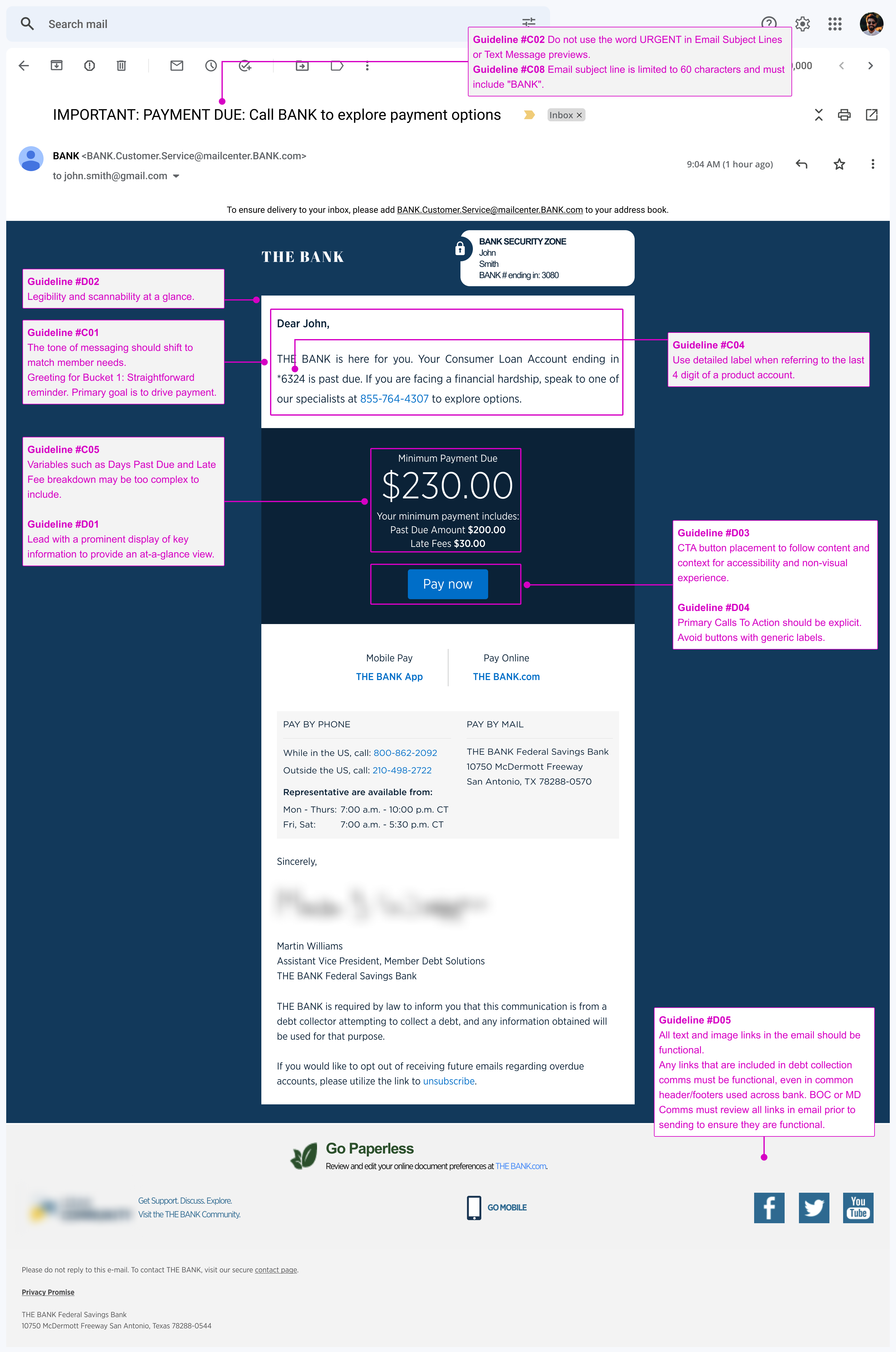
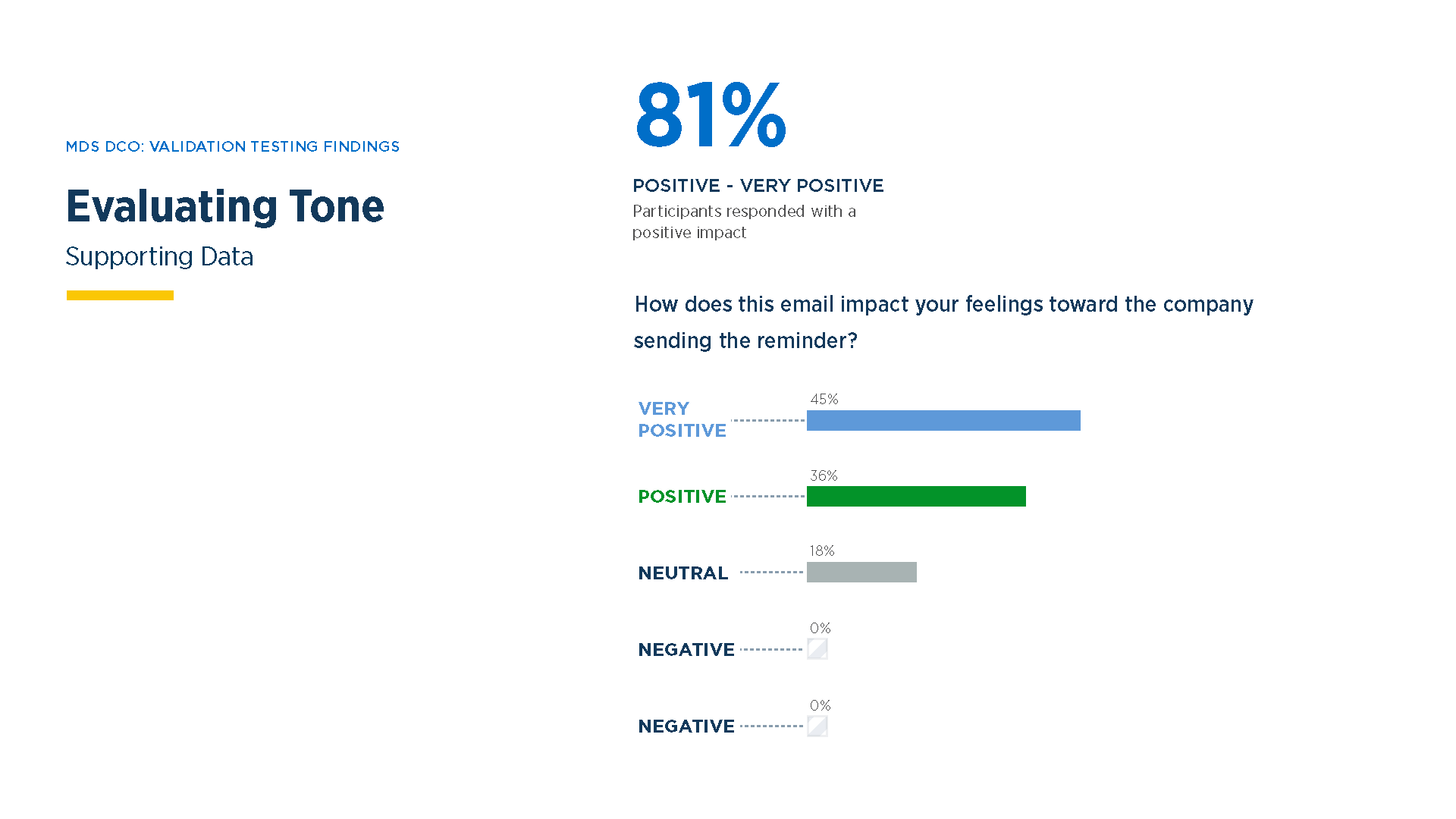
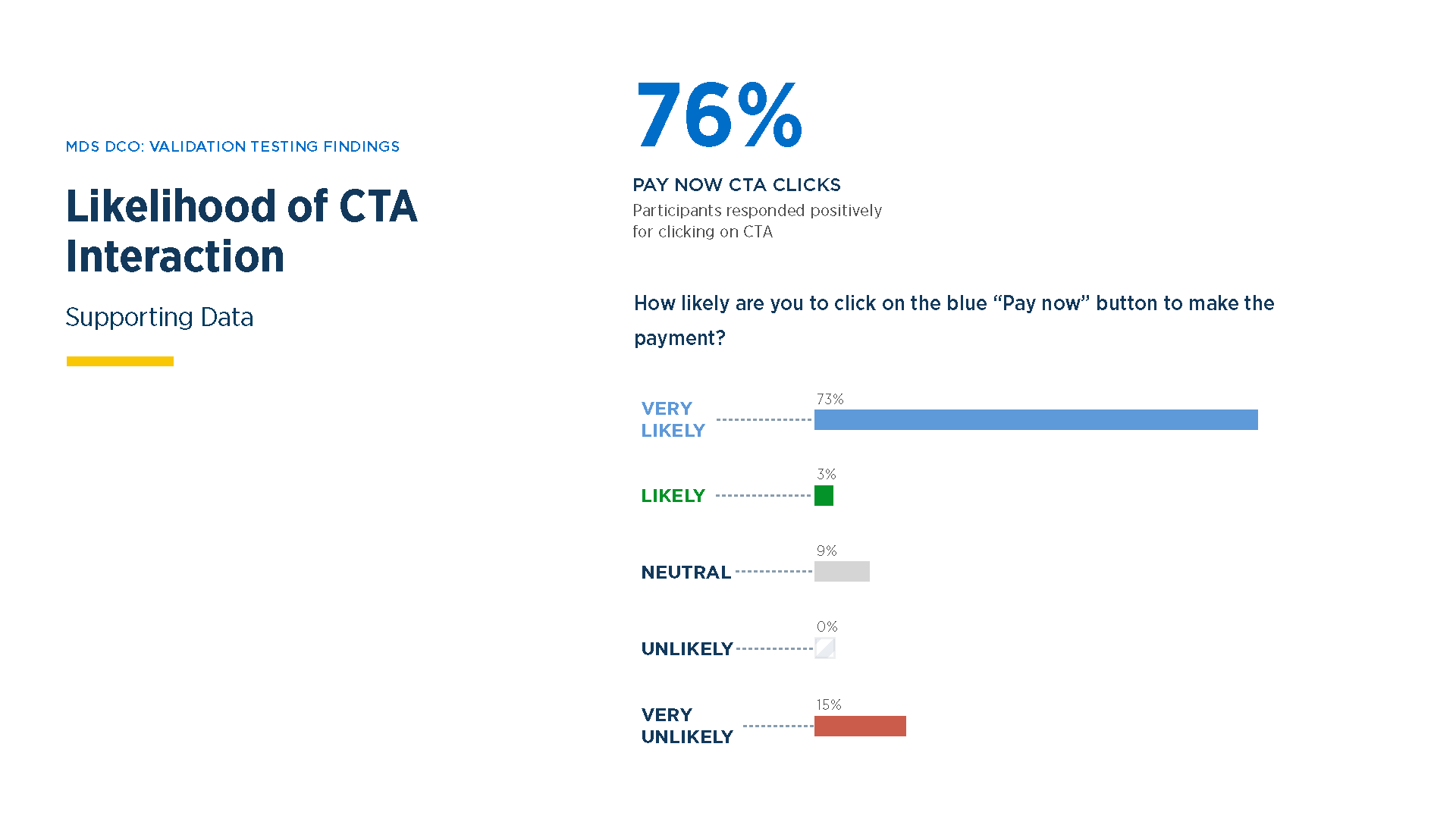
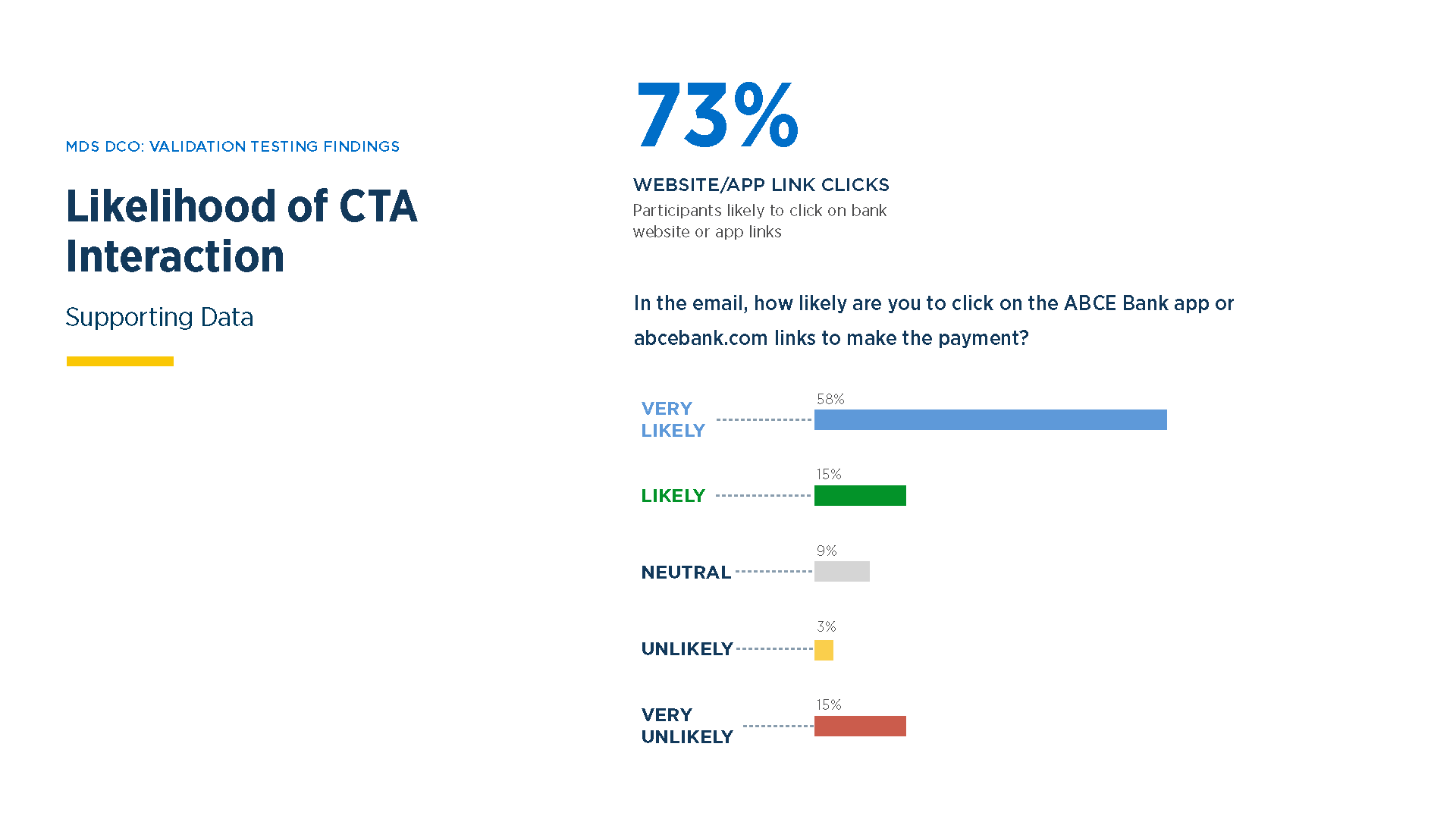
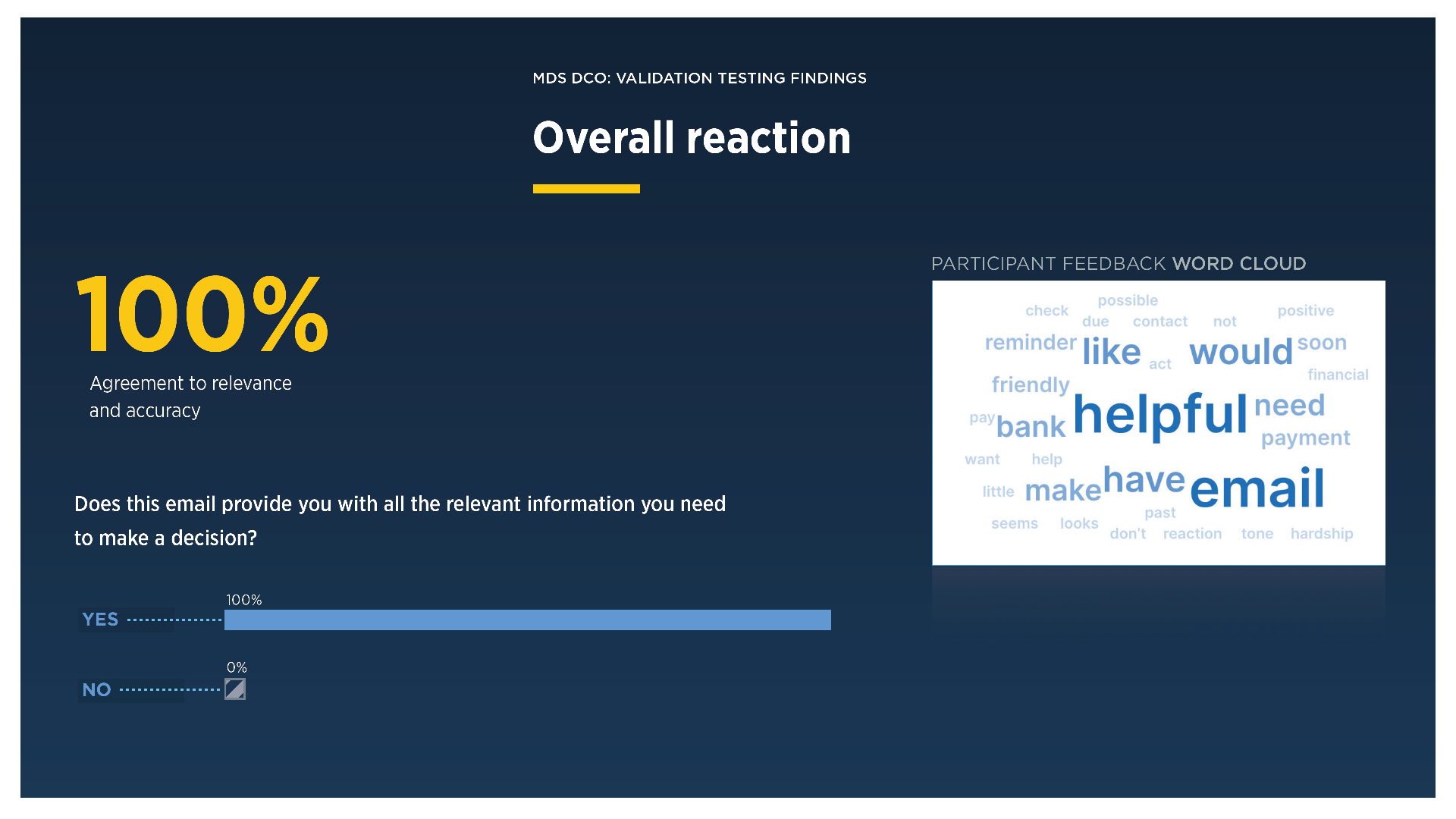
New email and SMS experiences went into rounds of testing with real members — and 100% of participants indicated they were likely to engage. That result was the proof point: pairing the compassionate communication strategy with UX design best practices produced unmistakable, replicable results — before a single message went live.
Deliverables extended past the ship. Tone, hierarchy, accessibility, and regulatory-compliance guidance were codified into a UX/UI Design Playbook so future teams could build on the strategy without unlearning it in five years.
"Bad things happen to good people."
The design principle that anchored every decision
The Outcome
What Made It Work
Before designing a single interaction, we named what past-due members were actually feeling. Every subsequent design decision was measured against whether it respected that reality — or worked against it.
Regulated financial services has real guardrails. We designed *inside* them, not around them — treating compliance as a co-author of the experience so the final work shipped without weeks of retrofitting.
Executive stakeholders didn't need new dashboards. They needed to see the design move the numbers already on their reports. Every prototype iteration was scored against open rate, engagement, and downstream business impact.
Selected Artifacts