Strategy & Innovation · Fortune 100 Bank
Teams inside a Fortune 100 Bank were deeply engaged in the work — but couldn't articulate the overarching vision or how their piece of it fit. We designed the 360° Teams Framework: a bespoke service-design system that dismantled silos, made "radical transparency" a living practice, and turned fragmented workflows into a scalable model for organizational efficiency.
The Ask
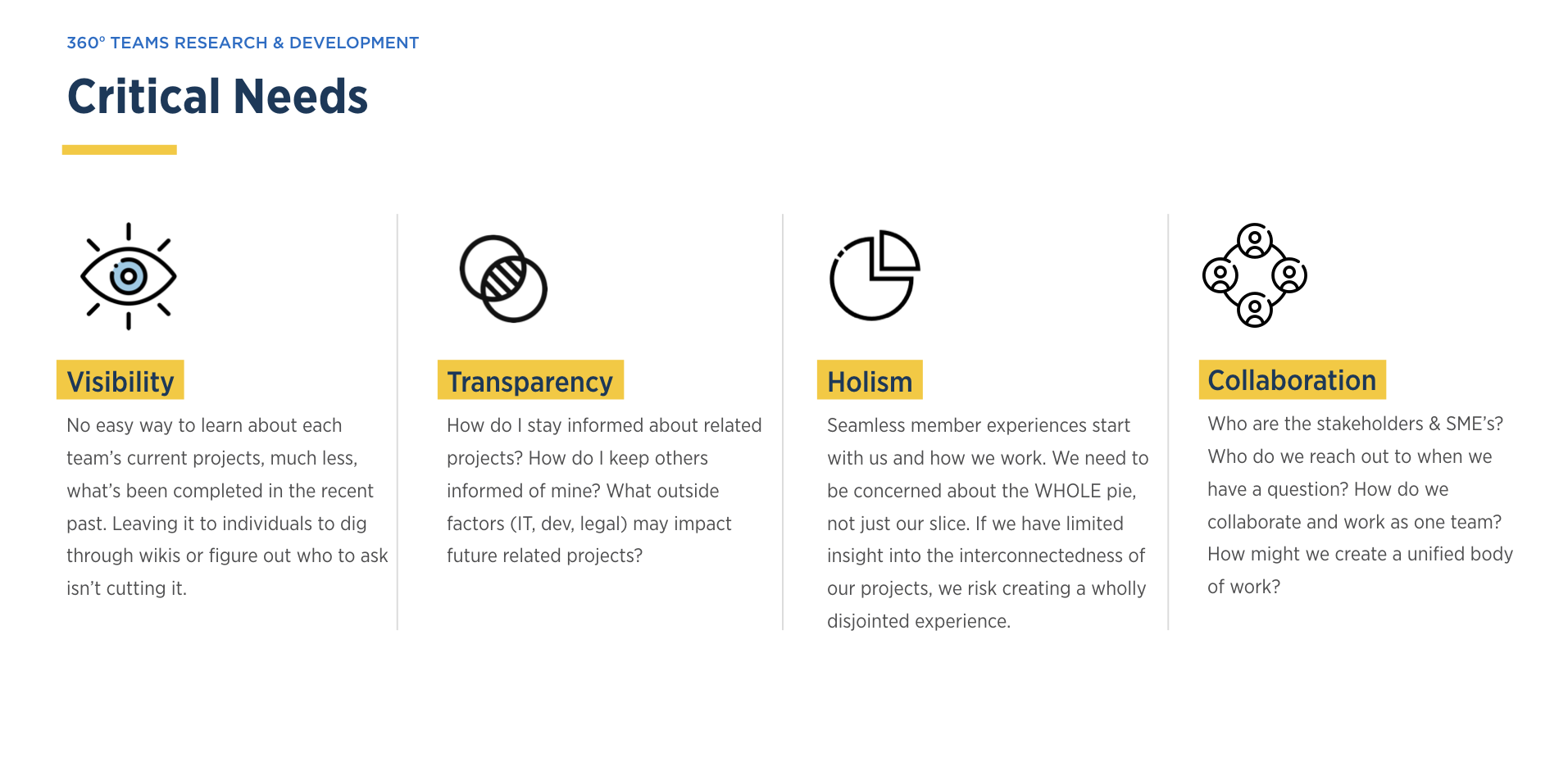
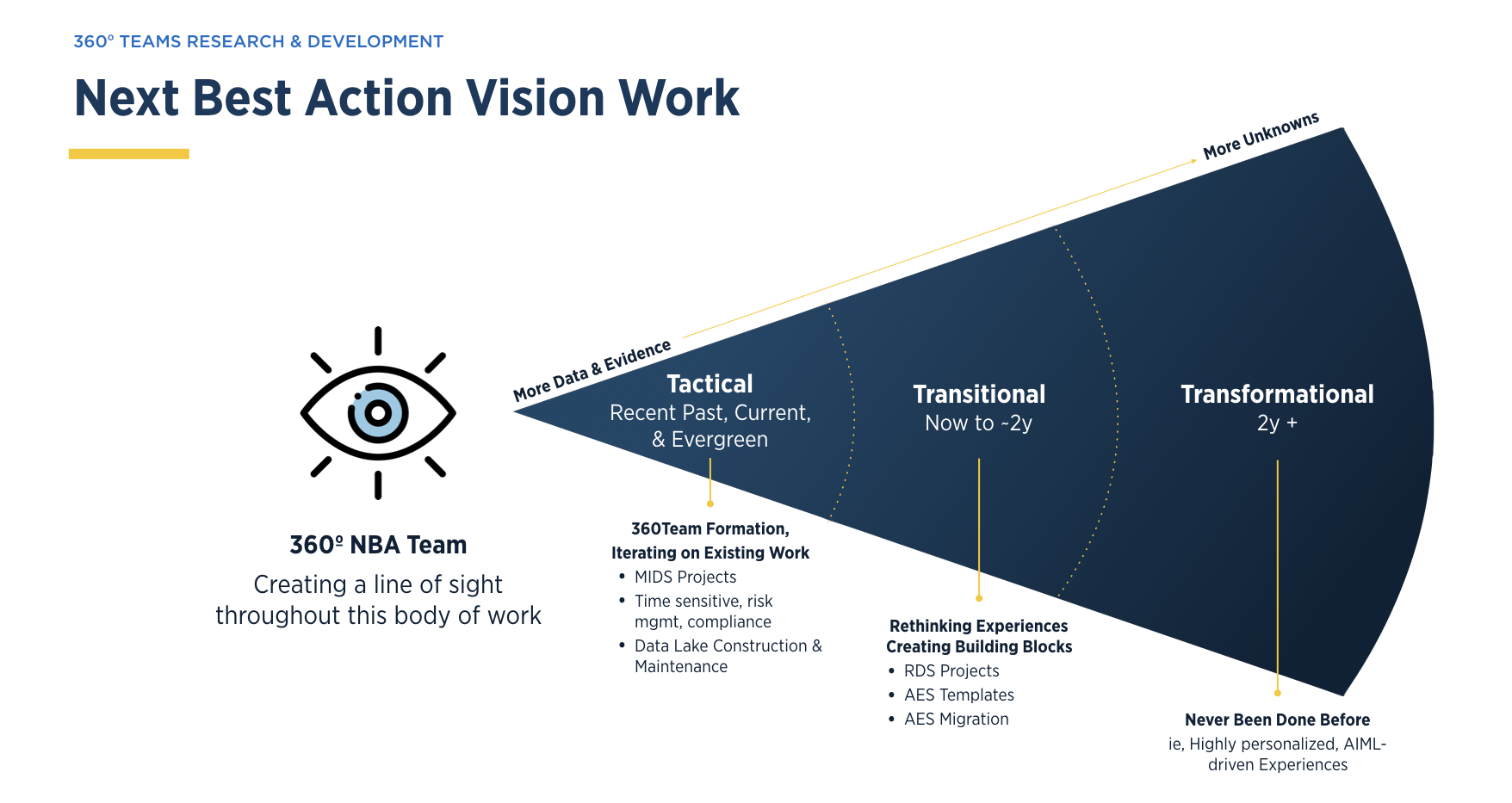
Fifty-plus contextual inquiries surfaced the truth: cross-functional teams were doing the work of a major Next Best Action initiative, but nobody could articulate the overarching vision anymore. Two years of momentum had obscured the mission it was originally serving.
The MarTech architecture was aging and disconnected across channels. Silos meant duplicative efforts and a real risk of disjointed member experiences. Leadership didn't need another org chart — they needed a service-design intervention that would restore visibility, unity, and shared purpose across every LOB touching the work.
The Approach
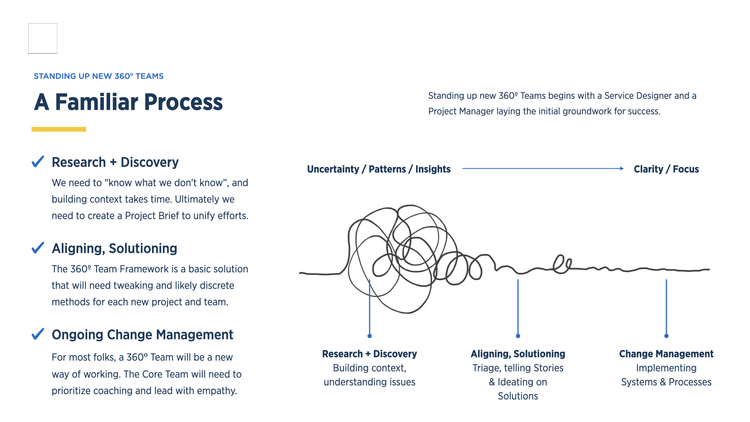
50+ interviews across the day-to-day, working, and executive levels — mapping who was doing what, who knew what, and where the mission had stopped connecting to the work.
Aligned the org on a shared set of Jobs to be Done and the collaboration norms that would make cross-functional work actually functional — before designing a single ritual around them.
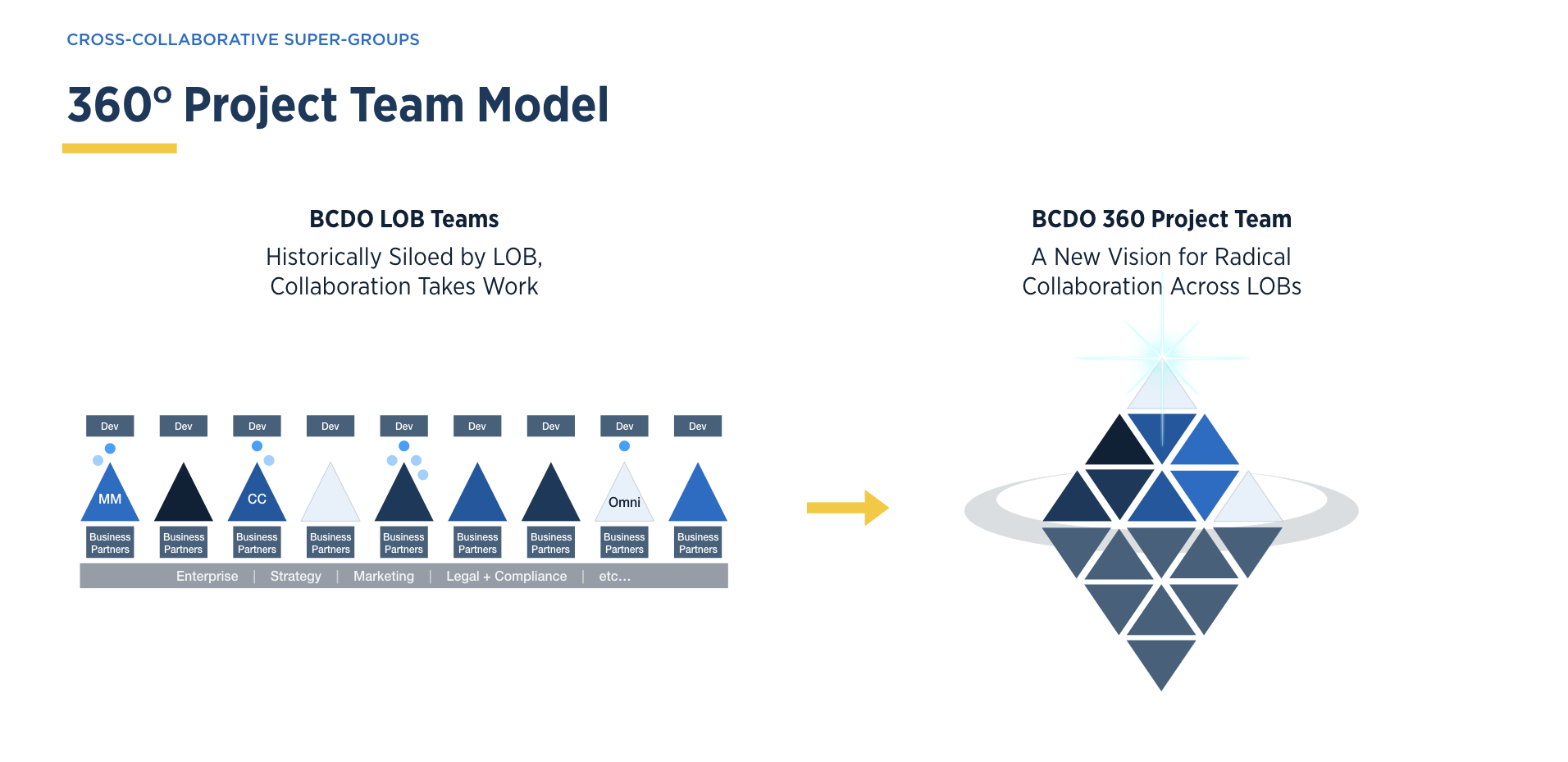
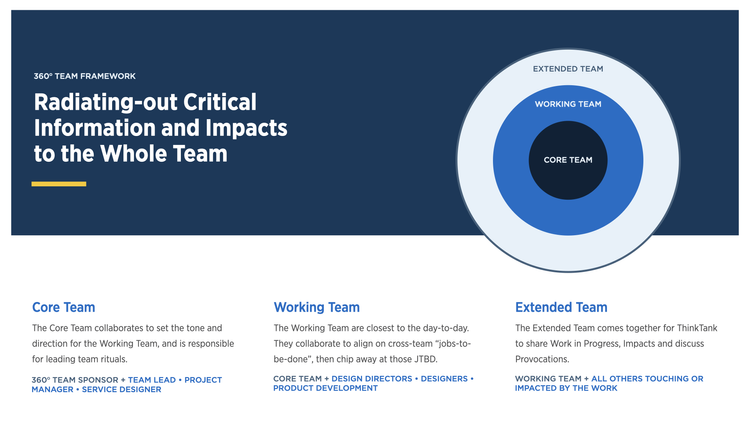
A three-tier framework — Core, Working, Extended — radiated information from tactical to executive. Backed by a centralized Team Wiki so knowledge lived somewhere everyone could find it, not in the head of whoever was in the meeting.
The framework didn't sunset after launch. A Governance Team evaluated change requests at PI planning, keeping the program relevant as the org and the work evolved.
Radical transparency. One team. Every level.
The organizing thesis behind the 360° Teams Framework
The Outcome
What Made It Work
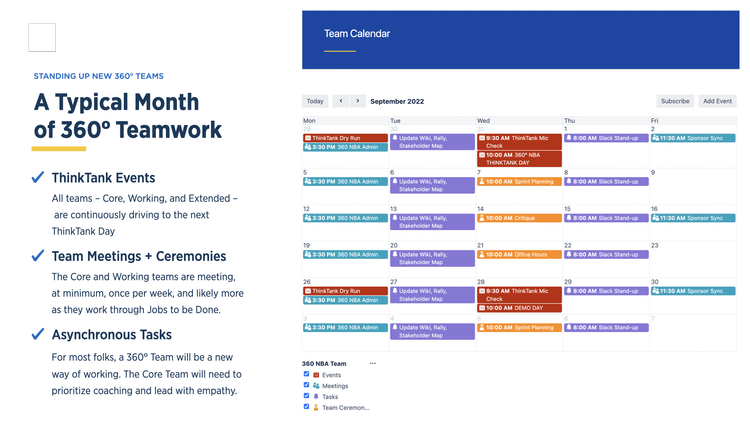
Demo Days, Think Tank, Office Hours, Work Critiques — regularly scheduled forums where transparency actually happened, not a PDF nobody read.
A tiered team model was the structural fix. Executives got first-hand exposure to WIP. Working teams got cross-functional context. Silos couldn't survive the geometry.
Frameworks that don't get maintained decay. Building the Governance Team into the launch is what turned 360° Teams from a moment into a durable operating model.
Selected Artifacts